Build Log: Will we lose our submarine under the sea?
|
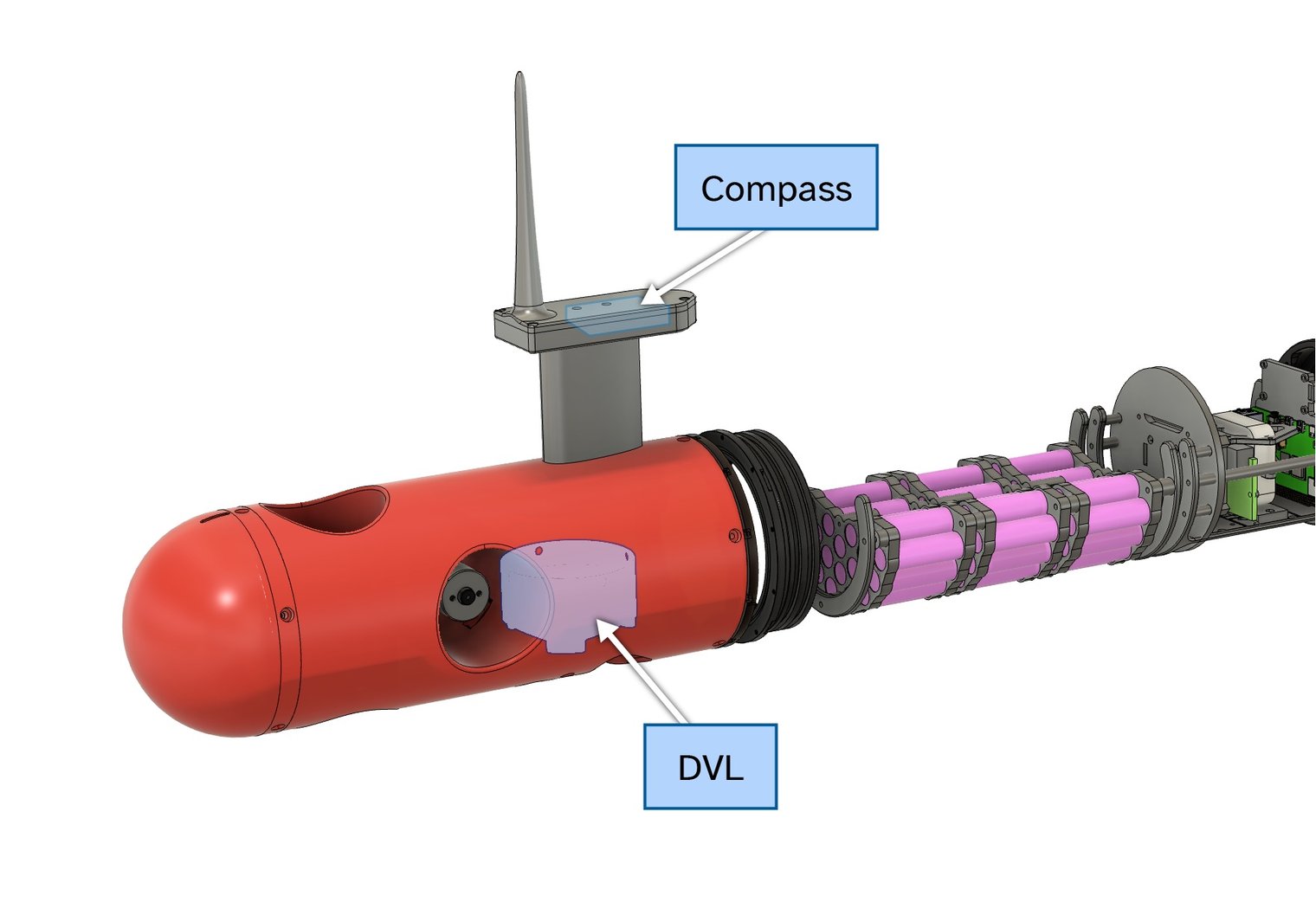
Hello Reader, Welcome back to The Build Log! We're almost ready to take the submarine on its mission under the sea, to explore a crashed WWII B-17 bomber. In this newsletter, we'll show you the tests we did before the mission, to make sure our underwater localization works well enough. Quick recap - our localization system is based on an external compass in the AUV's antenna - that provides the current heading (along with sensors in the Pixhawk), and a DVL (at the bottom of the submarine), which is essentially a very accurate speed sensor. If we know the location where we submerged, we can integrate the heading and speed readings to estimate the current location.
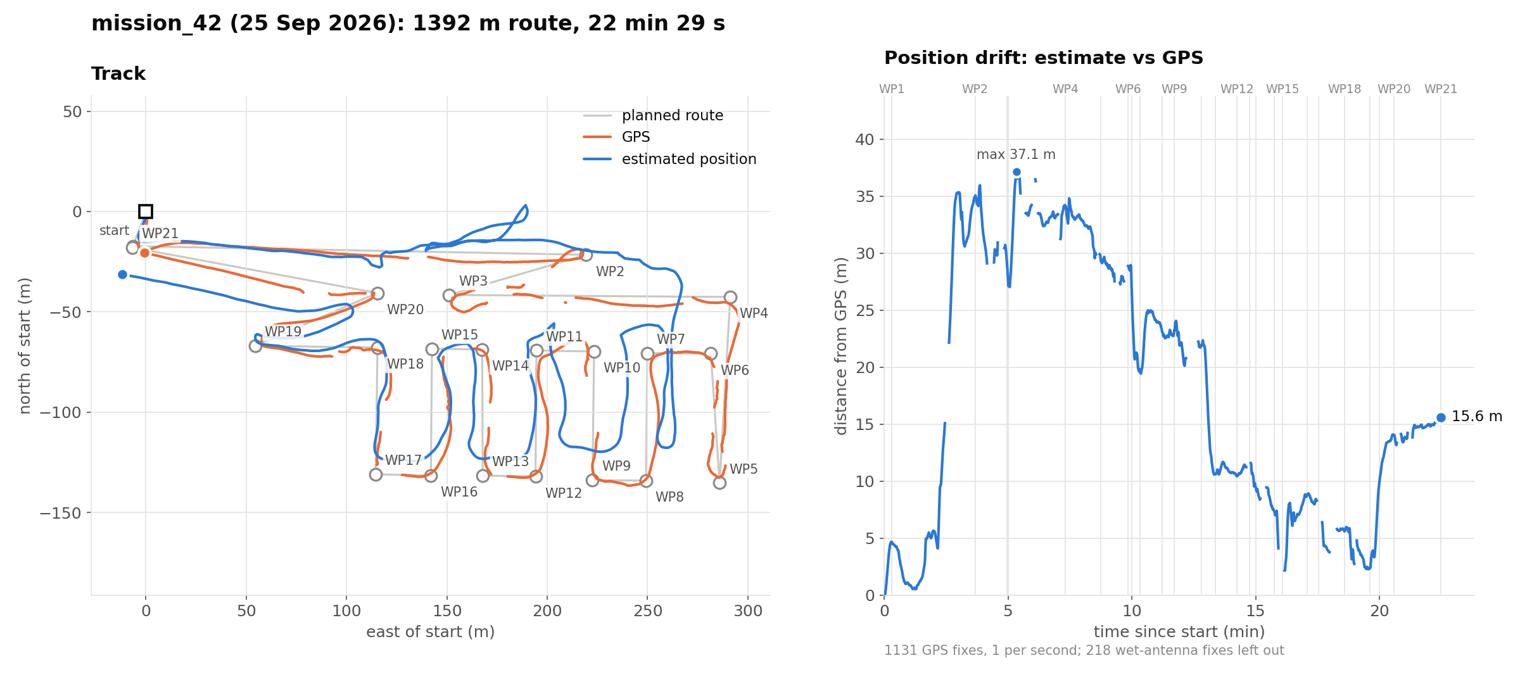
Of course, the position estimation error drifts over time. We just need to make sure that it doesn't drift too much, so that we can actually record / take a picture of the airplane. Our first goal is a localization error lower than about 20m per 500 meters traveled. To test it properly, we used our usual trick - a surface mission on the surface, at sea, at the test site. That way, we can compare real-time GPS data, with the position estimated by dead-reckoning algorithm running on the submarine. We needed to constantly monitor the submarine on a stand-up paddle to not lose it, and make sure no boats crashed into it. We call this mission, a calibration dog. It's because the shape kinda looked like a dog. It tests both the dead-reckoning-based localization system, and well as how well our navigation algorithm handles cornering. The first graph shows the "real" GPS position vs the DVL dead-reckoned position. The second graph shows the position error over time - higher value, means worse result. Lower value - better result.
As you can see, the results are worse than we expected based on previous tests (especially given the optimistic results we have shared in the last email) . The localization error grew to very high values (up to 37 meters!) only 7 minutes into the mission. Here is what we figured out:
In next week’s newsletter, we’ll show you how we fixed these issues and how the improved (!) results we achieved! Cheers, Piotrek, CPSdrone PS: You can access all of the previous releases of the newsletter here. |
The Build Log by CPSdrone
Subscribe if you already are following us on YouTube!!
Hello Reader, Welcome back to The Build Log! Last week we showed you the upgrades we made to our autonomous submarine. This week, we'll show you the actual mission we're going to be attempting with the submarine: We want to take a picture of a crashed WWII B-17 bomber. The wreck sits at the bottom of the Adriatic sea at around 70 meters: Because of the depth the plane is at, diving there is very hard and requires advanced scuba diving certifications. The mission we are attempting is also very...
Hello Reader, Welcome back to The Build Log! We are preparing our autonomous submarine for a very exciting mission in the Adriatic Sea, and in this e-mail we'll show you all of the upgrades we have made to the submarine to prepare it for the mission. 1_ Double thruster upgrade As you might have read in one of our previous newsletters, we had some problems with the submarine turning to the side while flying at high speed. This happened because of a phenomenon called "torque roll". The one...
Hello Reader, Welcome back to The Build Log! Since we are planning a new very exciting mission with our autonomous submarine (more info soon), we want to make it as reliable as we possibly can. One of the things we thought would be very useful is to upgrade our propellers. In the original design of the CPS A we have been using resin propellers, which came out to be quite brittle. They are much better than FDM printed propellers in terms of surface finish, but unfortunately they are not as...